Installing Railings That Keep Stairs Safe
Stair Railing Installation in Newtown, Pennsylvania for missing guardrails, loose handrails, or outdated baluster spacing
Kershbaumer Stairs & Rails installs stair railings for homeowners in Newtown, Pennsylvania who need to add guardrails to open staircases, replace handrails that have pulled away from wall anchors, or update baluster spacing that does not meet current building code. You might have a basement stair with no railing, a second-floor landing with only a wall-mounted handrail on one side, or balusters spaced wide enough to create a fall hazard for children or pets.
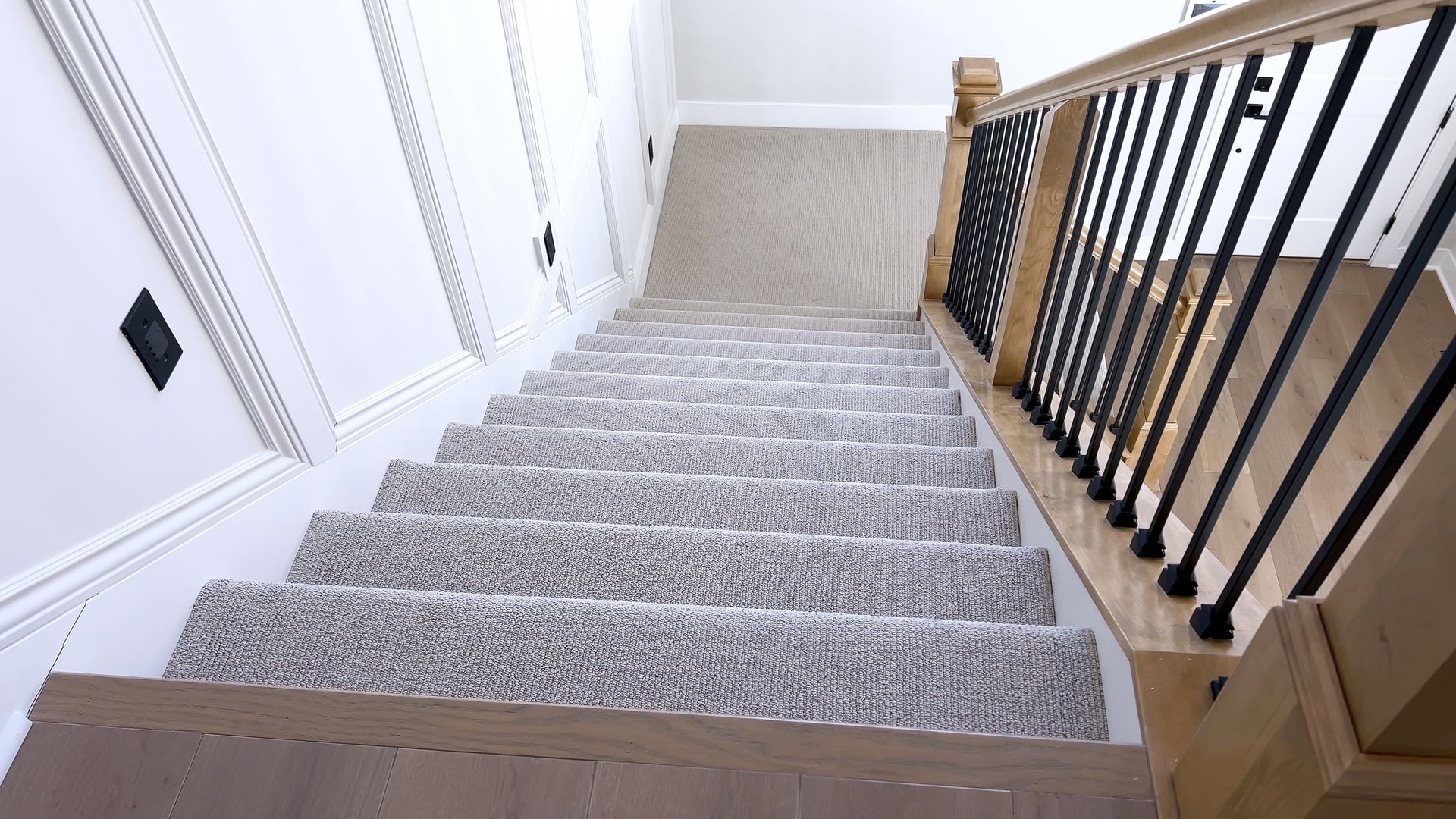
The installation process includes mounting newel posts or wall brackets to structural framing, installing handrails at the required height, and spacing balusters no more than four inches apart to prevent objects from passing through. Wood railings are sanded and finished to match existing trim, metal railings are powder-coated or painted to resist corrosion, glass panels are tempered and set in metal channels, and cable railings are tensioned to prevent sagging. Each railing system is load-tested to confirm it can withstand two hundred pounds of lateral force, the minimum standard under Pennsylvania residential code.
If your staircase lacks a railing or the existing railing no longer meets safety standards, contact Kershbaumer Stairs & Rails to review installation options in Newtown.
How Railing Installation Affects Stair Safety
You begin with a staircase that has no handhold, a loose handrail that shifts when gripped, or balusters spaced widely enough to allow a child's torso to pass through.
Kershbaumer Stairs & Rails measures the stair width and landing dimensions, calculates the handrail angle to match the stair slope, and selects mounting hardware rated for the expected load. Newel posts are through-bolted to stringers or floor framing, wall-mounted handrails are lagged into studs, and balusters are fastened to both the handrail and the tread or stringer.
After installation, you grip a handrail that does not move under pressure, walk alongside a baluster system that blocks falls, and use the staircase with confidence that the railing will support your weight if you lose balance. The handrail height places the top surface between thirty-four and thirty-eight inches above the tread nosing, the graspable profile allows your hand to wrap around the rail, and the railing extends beyond the top and bottom risers to provide support at both ends of the stair.
Material choice depends on the stair's location and design. Wood railings match traditional interiors and can be stained or painted, metal railings suit modern homes and require no maintenance beyond occasional cleaning, glass panels preserve sightlines in open-plan layouts, and cable systems provide a minimalist appearance with corrosion-resistant stainless steel components. The service includes cutting, drilling, and finishing all components on site to fit the specific stair geometry.
Railing Installation Details
These questions address common concerns about railing materials, code compliance, and installation methods in Newtown and surrounding areas.
What makes a handrail graspable under building code?
The rail must have a circular or oval cross-section between one and one-quarter and two inches in diameter, or a non-circular profile with a perimeter between four and six and one-quarter inches, and the rail must be mounted with enough clearance from the wall to allow fingers to wrap underneath without obstruction.
How are newel posts anchored to prevent movement?
Posts are through-bolted to the stair stringer, floor joist, or landing frame with lag screws or carriage bolts, and the fasteners must penetrate solid wood rather than relying on surface-mounted brackets, which cannot resist the lateral forces applied to a railing during normal use.
When is a railing required on both sides of a staircase?
Code requires a handrail on at least one side of any stair with four or more risers, but stairs wider than forty-four inches must have handrails on both sides, and open edges on landings or balconies require guardrails regardless of stair width in Newtown, Pennsylvania.
Why do cable railings need regular tensioning?
Stainless steel cables stretch slightly under load and with temperature changes, so tensioning hardware is adjusted periodically to maintain a taut line that meets the four-inch spacing rule, and cables are inspected for fraying or corrosion where they pass through posts.
How do you match new railing to existing woodwork?
Wood species, grain pattern, and stain color are selected to coordinate with baseboards, door casings, or flooring, and custom milling replicates profiles found on existing handrails or newel posts if the original style is no longer available as a stock product.
Kershbaumer Stairs & Rails installs railings for interior and exterior staircases, landings, and balconies, with material options suited to your home's design and your budget. Reach out to discuss your staircase and schedule a railing installation in Newtown, Pennsylvania.