Fabricating Handrails Built to Your Specifications
Custom Handrail Fabrication in Newtown, Pennsylvania for non-standard stair angles, wall-mounted runs, and unique profiles
Kershbaumer Stairs & Rails fabricates custom handrails for homeowners in Newtown, Pennsylvania who need a handrail profile that matches historical trim, a continuous rail that follows an unusual stair geometry, or a wall-mounted rail for a basement or attic stair with limited clearance. You might have a curved staircase where stock railing cannot bend to the required radius, a historic home where the original handrail profile is no longer manufactured, or a narrow stair where a standard railing would block passage.
The fabrication process includes measuring the stair run and angle, selecting or milling a handrail profile, cutting the rail to length with the correct end angles, and installing mounting brackets at sixteen-inch intervals along the wall or attaching the rail to baluster tops on open staircases. Wood handrails are routed to shape, sanded smooth, and finished with stain or paint to match adjacent trim. Metal handrails are welded or mechanically fastened, ground smooth at joints, and coated to prevent rust. Each handrail is installed at the code-required height and tested for stability.
If your staircase requires a handrail that cannot be purchased off the shelf, contact Kershbaumer Stairs & Rails to discuss fabrication options in Newtown.
What Custom Fabrication Provides
You start with a staircase that lacks a handrail, has a rail that does not meet code for graspability or mounting height, or requires a profile that matches the rest of your home's woodwork.
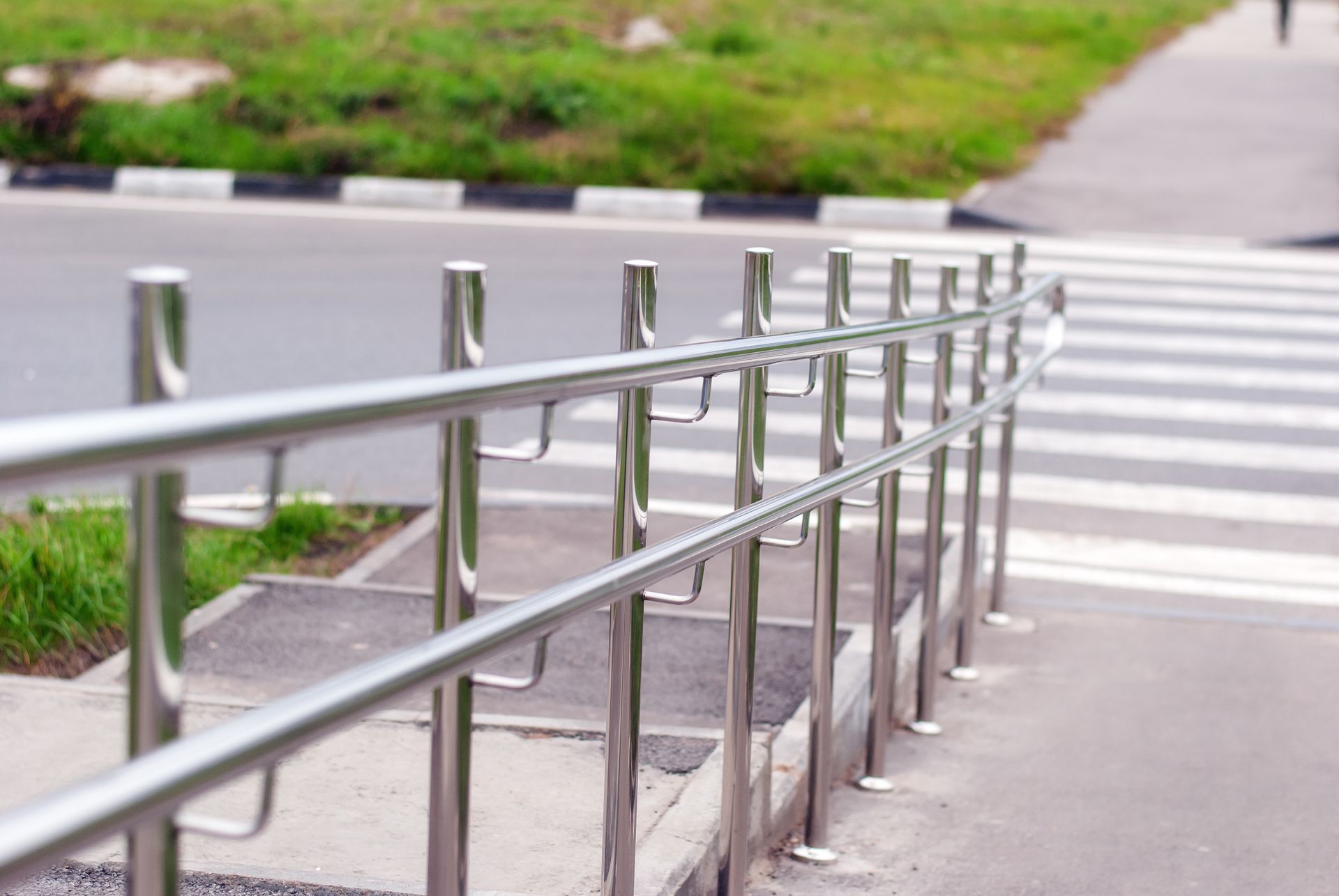
Kershbaumer Stairs & Rails measures the stair's horizontal run, calculates the angle of ascent, and mills or bends a handrail that follows the stair slope without flat spots or gaps. Wall-mounted rails are secured to studs with brackets spaced closely enough to prevent sagging, and stair-mounted rails are fastened to baluster tops or newel posts with dowels, screws, or metal connectors.
After installation, you grip a handrail that runs continuously from bottom to top without joints that catch on your palm, hold a profile shaped for comfort rather than appearance alone, and rely on mounting hardware that does not shift when force is applied. The handrail height places the top edge between thirty-four and thirty-eight inches above the tread nosing, the profile diameter or perimeter falls within the graspable range defined by building code, and the finish matches the stain color or paint sheen used on doors, baseboards, or window casings elsewhere in the home.
Material options include oak, maple, walnut, cherry, and mahogany for wood handrails, and steel, aluminum, or bronze for metal railings. Custom profiles are milled using templates taken from existing trim or drawn to meet specific ergonomic or aesthetic requirements. The service includes sanding, finishing, and sealing wood surfaces, and powder coating or painting metal surfaces to resist wear and corrosion.
Fabrication and Installation Considerations
Homeowners in Newtown often ask about material durability, profile options, and mounting methods when planning custom handrail projects.
What makes a handrail profile comfortable to grip?
A circular cross-section between one and one-half and two inches in diameter allows most hands to wrap around the rail, while oval or rectangular profiles with rounded edges work if the perimeter stays between four and six and one-quarter inches, and sharp corners or flat surfaces cause discomfort during prolonged contact.
How do you fabricate a handrail for a curved staircase?
Wood is steamed or laminated in thin strips to bend around the curve without cracking, or metal tubing is bent using a mandrel to maintain a consistent diameter, and the rail is anchored to the curved stringer or baluster tops with brackets spaced closer together than on a straight run to prevent twisting.
When is a wall-mounted handrail required instead of a baluster system?
Code allows a wall-mounted rail on one side of the stair if the other side is enclosed by a wall and the stair width is less than forty-four inches, and wall-mounted rails take up less space than a full railing system, making them suitable for narrow basement or attic stairs in older Newtown homes.
Why do some handrails feel loose even after installation?
Brackets must be lagged into wall studs rather than drywall anchors, and the bracket spacing must be tight enough to prevent flex between supports, so a handrail mounted every thirty-six inches will feel springy, while one mounted every sixteen inches remains rigid under load.
How long does fabrication take for a custom profile?
Milling a new profile from a template or drawing typically requires one to two days, while matching an existing profile involves creating a template from the original handrail, setting up router or shaper tooling, and running test pieces to confirm the match, which can extend the timeline by several days depending on complexity.
Kershbaumer Stairs & Rails works with homeowners, contractors, and restoration specialists to fabricate handrails that meet code, fit the stair geometry, and match the design intent. Reach out to discuss your handrail project and material preferences in Newtown, Pennsylvania.