
Building Outdoor Stairs That Handle Weather and Use
Exterior Stair Construction in Newtown, Pennsylvania for deck access, porch entry, and grade transitions
Kershbaumer Stairs & Rails builds exterior staircases for homeowners in Newtown, Pennsylvania who need durable access between ground level and elevated decks, porches, or doorways. You might be replacing a rotted wooden stair that pulls away from the deck frame, adding a secondary exit to meet updated residential code, or installing a new entry stair as part of a porch expansion.
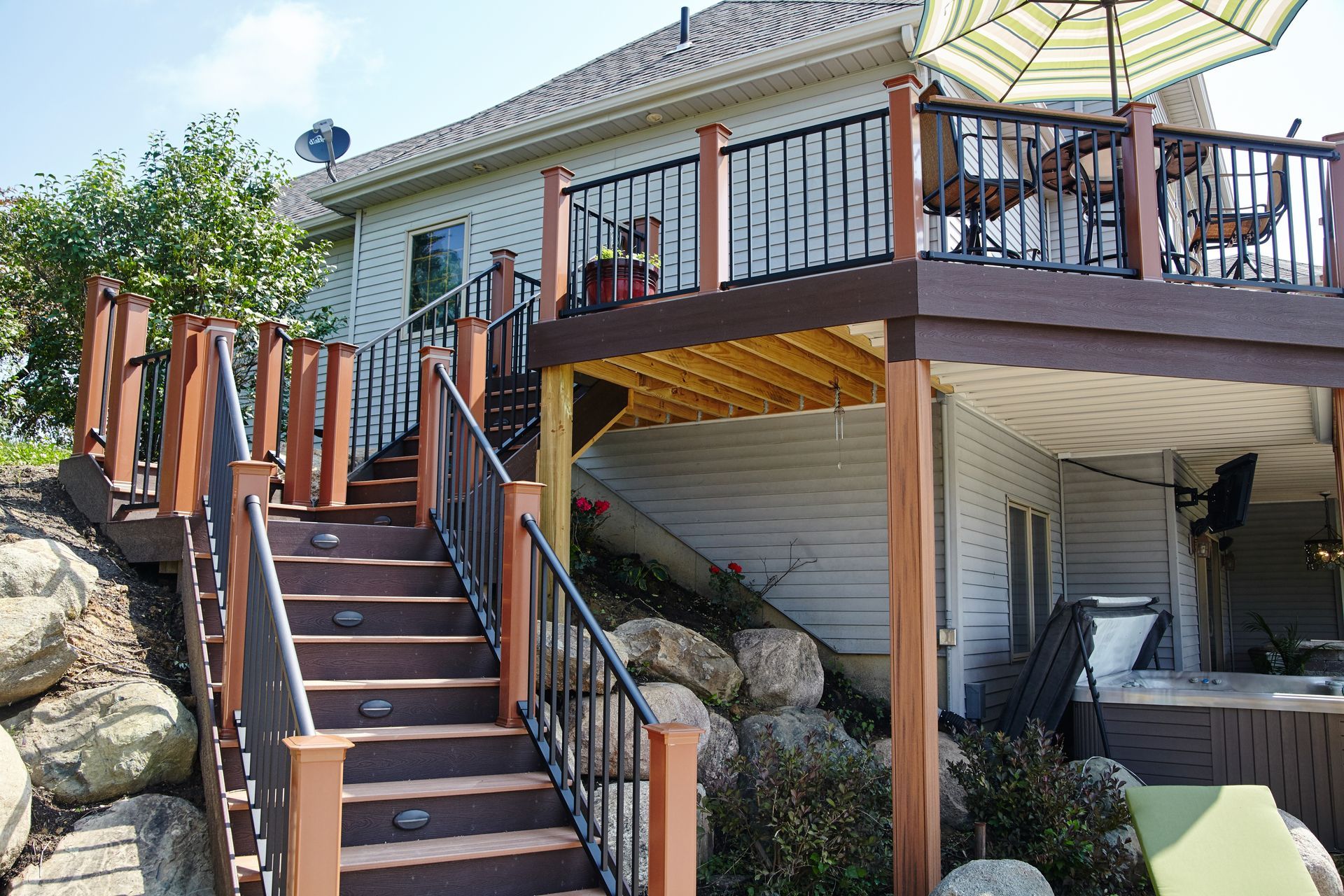
The construction process uses pressure-treated lumber, composite decking material, or metal framing systems chosen for resistance to moisture, freeze-thaw cycles, and ultraviolet exposure common in southeastern Pennsylvania. Stringers are cut to the correct rise and run, then anchored to the deck ledger or rim joist at the top and mounted to a concrete footing or gravel pad at the bottom. Treads are fastened with corrosion-resistant screws, and railing posts are through-bolted to the stringers or deck frame to prevent movement. Slip-resistant tread surfaces reduce fall risk in wet or icy conditions.
If you need a new exterior stair or a replacement for failing components, contact Kershbaumer Stairs & Rails to discuss material options and code requirements in Newtown.
What Changes After an Outdoor Stair Is Installed
You start with uneven ground, a deck without code-compliant egress, or a porch that requires a temporary step stool for entry.
Kershbaumer Stairs & Rails measures the vertical distance from grade to deck surface, calculates the number of risers and the horizontal run required, and installs stringers that support treads at consistent intervals without sagging or flexing under load.
Once the stair is complete, you step on treads that remain level, grip a railing mounted securely to posts that do not wobble, and walk between levels without adjusting your stride to accommodate uneven riser heights. Water drains off the tread surface instead of pooling, and the structure remains stable through seasonal temperature swings and freeze-thaw cycles that cause untreated wood to warp or crack.
Material selection affects longevity. Pressure-treated wood is the most economical option and lasts fifteen to twenty years when properly maintained, composite treads resist rot and insect damage without requiring staining or sealing, and metal stringers eliminate the risk of wood decay at ground contact points. The service includes digging and pouring footings if the stair requires a foundation below the frost line, which in Pennsylvania is typically thirty-six inches deep.
Planning Considerations for Exterior Stairs
The following questions address structural and regulatory details relevant to outdoor stair projects in Newtown and surrounding areas.
What depth of footing is required for exterior stair supports?
Pennsylvania frost line depth is approximately thirty-six inches, so footings must extend below that depth to prevent heaving when the ground freezes and thaws, and footings are poured with concrete rather than set on gravel or compacted soil in areas with clay or expansive soil types.
How do you prevent wood stairs from rotting at ground contact?
The bottom of each stringer is cut to rest on a concrete footing or metal bracket rather than sitting directly on soil, and pressure-treated lumber rated for ground contact is used for any component within six inches of grade to resist moisture absorption and fungal growth.
When is a railing required on an outdoor stair?
Building code requires a railing on any stairway with more than three risers, and the railing must be between thirty-four and thirty-eight inches above the tread nosing, with balusters spaced no more than four inches apart to prevent falls.
Why do some outdoor stairs feel bouncy or unstable?
Insufficient stringer thickness, long spans without mid-support, or inadequate fastening at the deck connection can allow flexing under load, so stringers are typically doubled or tripled for stairs wider than three feet, and blocking is added between stringers to prevent lateral movement.
How do composite treads compare to wood for exterior use?
Composite material does not absorb water, resists fading and staining, and requires no sealing or painting, but it expands and contracts more than wood with temperature changes, so fasteners must allow for movement, and the initial cost is higher than pressure-treated lumber.
Kershbaumer Stairs & Rails coordinates exterior stair projects with deck construction, porch framing, and site grading schedules to ensure proper integration and code compliance. Reach out to review your site conditions and material preferences for outdoor stair construction in Newtown, Pennsylvania.