Staircases Built to Fit Your Space and Vision
Custom Staircase Design & Installation in Newtown, Pennsylvania for layouts that do not fit standard plans
Kershbaumer Stairs & Rails designs and installs custom staircases for homeowners in Newtown, Pennsylvania who need a stair layout shaped around irregular floor plans, vertical clearance limits, or specific design preferences. When you work with a builder who cuts and assembles each component on site rather than ordering prefabricated units, the staircase follows the architecture of your home instead of forcing the architecture to accommodate the stair.
The service includes field measurements, layout drawings that show tread depth and riser height, material selection from wood species, metal frame systems, and glass panel options, and fabrication of stringers, treads, risers, and mounting hardware. Straight runs work for open spans, L-shaped and U-shaped configurations turn within tighter floor plans, and spiral designs fit where horizontal space cannot accommodate a conventional stair. Each layout is drawn to meet Pennsylvania building code for riser uniformity, tread depth, and headroom clearance.
If your project requires a staircase that fits a specific footprint or matches existing interior finishes, contact Kershbaumer Stairs & Rails to review dimensions and material options in Newtown.
What Changes Between Concept and Completed Stair
You begin with measurements of the vertical distance between finished floors and the horizontal area available for the stair footprint.
Kershbaumer Stairs & Rails uses those dimensions to calculate the number of risers, the run of each tread, and the angle of the stringer, then prepares a layout drawing that shows where the stair begins, where it turns if needed, and where it terminates at the upper level.
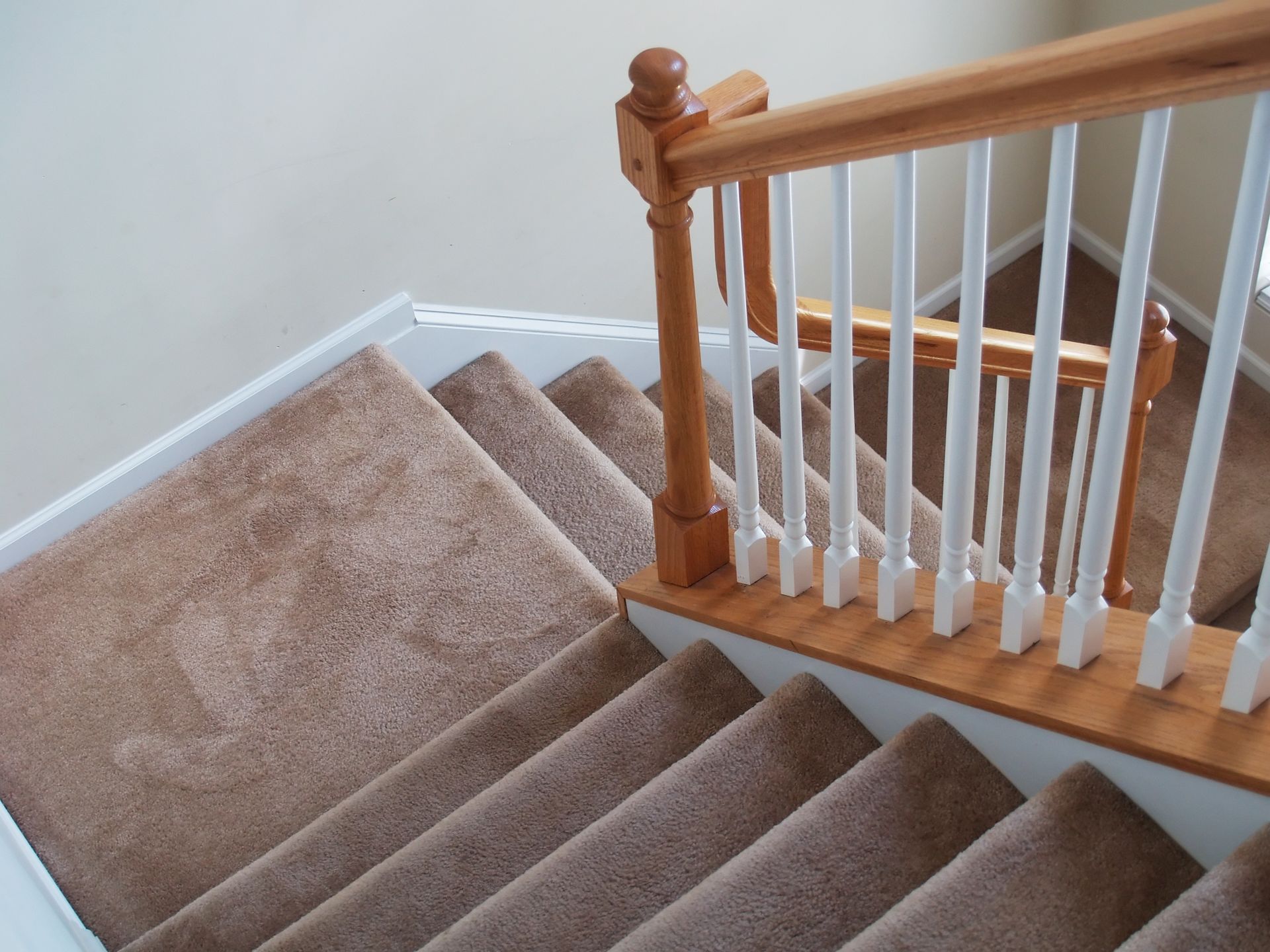
Once the staircase is installed, you walk on treads that align with your flooring, grip a railing anchored to the wall or baluster posts, and move between floors without adjusting your stride to uneven riser heights. The stair occupies only the floor space allocated in the plan, and the materials match or complement the wood trim, metal accents, or glass partitions already present in your home.
Material selection affects durability and maintenance. Hardwood treads resist wear in high-traffic areas, metal stringers support open-riser designs without requiring solid risers, and glass panels provide railing infill without blocking sightlines. The service includes mounting all structural components to floor joists and wall framing, sanding and finishing wood surfaces, and installing balusters or panel systems that meet code for spacing and height.
Details That Affect Staircase Planning
The following questions address common planning and installation considerations for custom staircases in Newtown and surrounding areas.
How do you determine the correct riser height and tread depth?
You divide the total vertical distance by the number of risers to ensure each step is uniform, then adjust the tread depth to fit the horizontal space while maintaining a comfortable stride and meeting minimum code requirements for run and nosing projection.
What materials work best for outdoor stair components?
Pressure-treated wood, composite decking, and galvanized or powder-coated metal resist moisture and temperature changes better than interior-grade materials, and slip-resistant tread surfaces reduce fall risk in wet or icy conditions common in Pennsylvania winters.
When is a spiral staircase the right choice?
When the available floor area is too narrow for a straight or L-shaped run, a spiral configuration reduces the footprint by stacking treads around a central post, though the trade-off is a steeper climb and narrower tread width at the inside edge.
Why do some staircases require a landing?
Building code requires a landing when the vertical rise exceeds a specific height or when the stair changes direction, and landings provide a rest point and reduce the consequence of a fall by breaking the run into shorter segments.
How long does installation take once materials arrive?
Most residential staircases require two to four days for structural assembly, another day for railing and baluster installation, and additional time for sanding, staining, or sealing if wood components need a finish coat applied on site.
Kershbaumer Stairs & Rails works with architects, builders, and homeowners to coordinate stair installation with framing schedules and finish work. Reach out to discuss your floor plan and timeline for a custom staircase project in Newtown, Pennsylvania.