Code-Compliant Stairs for High-Traffic Buildings
Commercial Stair & Railing Services in Newtown for multi-family, office, and retail properties that require ADA-compliant and heavy-duty stair systems
Kershbaumer Stairs & Rails designs and installs commercial stair and railing systems throughout Newtown, Pennsylvania for property managers, developers, and business owners who need code-compliant solutions built to handle continuous use. You need commercial-grade stairs when occupancy codes require specific riser heights, tread depths, and handrail configurations, or when the building sees foot traffic levels that would damage residential-grade construction. These systems use heavier materials, reinforced connections, and finishes that resist wear in lobbies, stairwells, exterior access points, and multi-story buildings.
The crew works from approved plans that meet local building and accessibility codes, including ADA requirements for handrail height, extension, and graspability. Stringers are built with commercial-grade lumber or steel, and treads are selected for slip resistance and durability. Railings include continuous handrails on both sides, proper clearance from walls, and returns at the top and bottom of each run. Materials are chosen to meet fire ratings and finish requirements specific to the building type and use.
If your project requires stairs that meet commercial building codes and will hold up under heavy use, this service delivers systems designed for compliance, safety, and longevity in Newtown properties.
What Commercial Installation Includes and Requires
You will see installations coordinated with other trades to meet project timelines, often staged to allow access for mechanical, electrical, and finishing crews.
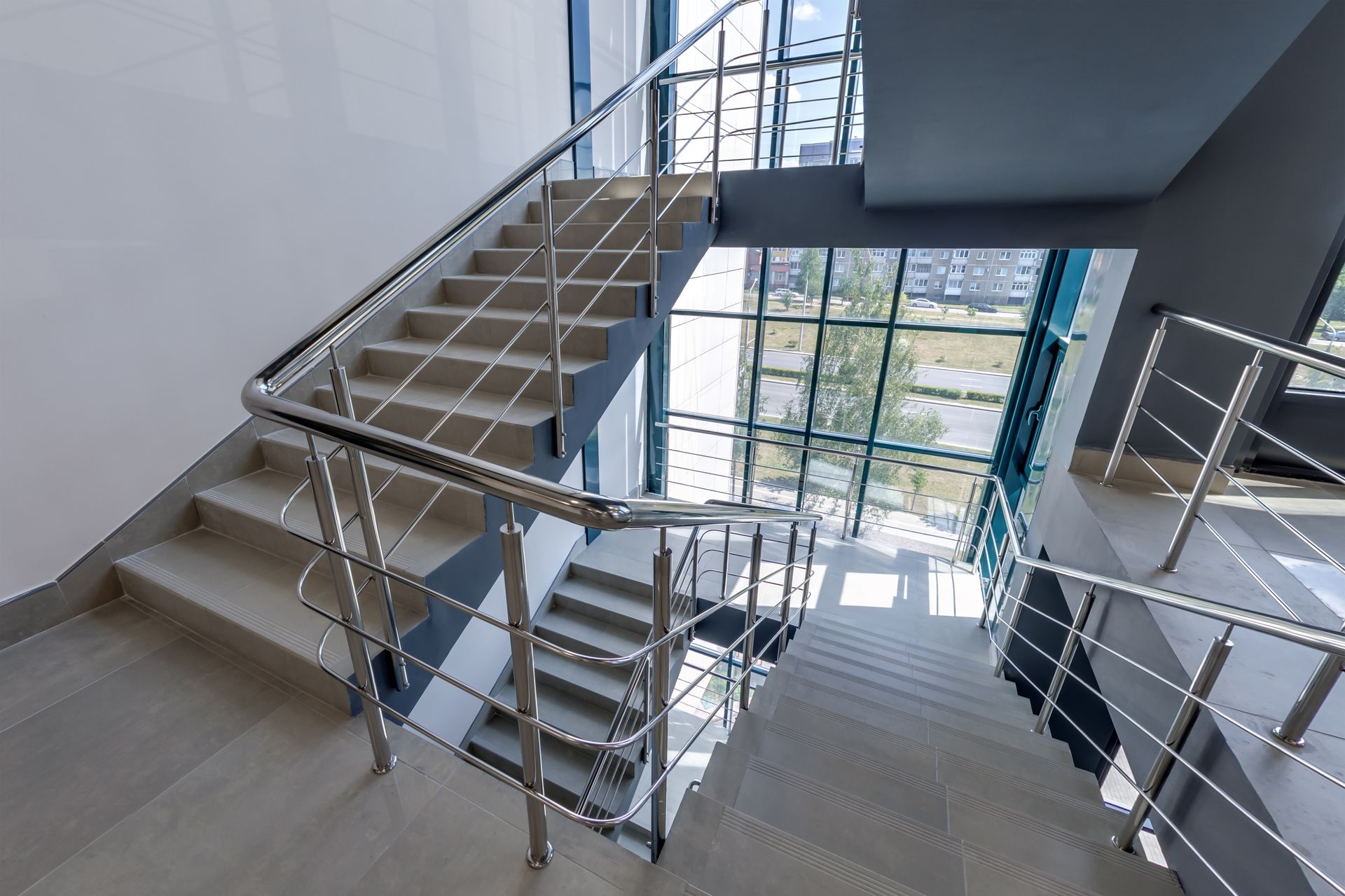
Handrails are mounted at the code-required height, typically between thirty-four and thirty-eight inches, and extend horizontally beyond the top and bottom risers to provide continuous support. Treads are fastened with industrial adhesive and mechanical fasteners rated for commercial loads, and nosings include slip-resistant inserts or abrasive strips where codes or high-traffic conditions require them.
Once complete, your staircase will pass inspections for riser height uniformity, handrail placement, load capacity, and accessibility compliance. The system will handle daily use from tenants, customers, or employees without loosening, squeaking, or showing premature wear. Kershbaumer Stairs & Rails coordinates with general contractors and inspectors to ensure installations meet Pennsylvania building codes and ADA standards applicable to the property type.
Commercial work follows stricter timelines than residential projects, and delays in material delivery or site access can affect scheduling. The scope typically does not include permits or architectural drawings, which are provided by the property owner or general contractor. Installation requires clear access to the site and may need to occur outside regular business hours to avoid disrupting building occupants.
What Commercial Clients Ask About Stair Installations
Commercial projects involve more regulations, tighter deadlines, and different material standards than residential work, and these questions address the specifics that matter most to property owners and contractors.
What makes a staircase ADA-compliant?
ADA compliance requires handrails on both sides at the correct height, handrail extensions at the top and bottom, consistent riser heights, adequate tread depth, and contrasting nosing or tactile indicators where required by the accessibility standards for the building type.
How do you ensure stairs meet commercial load requirements?
Commercial stairs are designed and built to handle higher live loads than residential stairs, using thicker stringers, closer spacing of supports, and fasteners rated for the expected occupancy and traffic levels.
Why do commercial projects require specific materials?
Fire codes, durability standards, and maintenance expectations dictate material choices, so commercial stairs often use metal stringers, fire-rated wood, or treated lumber, and finishes must meet slip-resistance and wear standards for public spaces.
When do you need to coordinate with other trades?
Stair installation often happens after framing and before drywall or flooring, so scheduling must align with the general contractor's timeline and allow access for trades working in the same stairwell or adjacent areas in your Newtown building.
How long does a commercial stair installation take?
Timelines depend on the number of floors, material selection, and site conditions, but a typical interior stairwell in a multi-story building takes one to two weeks from framing to final handrail installation and inspection approval.
Kershbaumer Stairs & Rails installs commercial stair and railing systems in Newtown that meet the codes and performance standards required for office buildings, retail spaces, and multi-family properties. If your project needs stairs built for compliance, safety, and heavy use, this service delivers systems designed to pass inspection and hold up over time.